
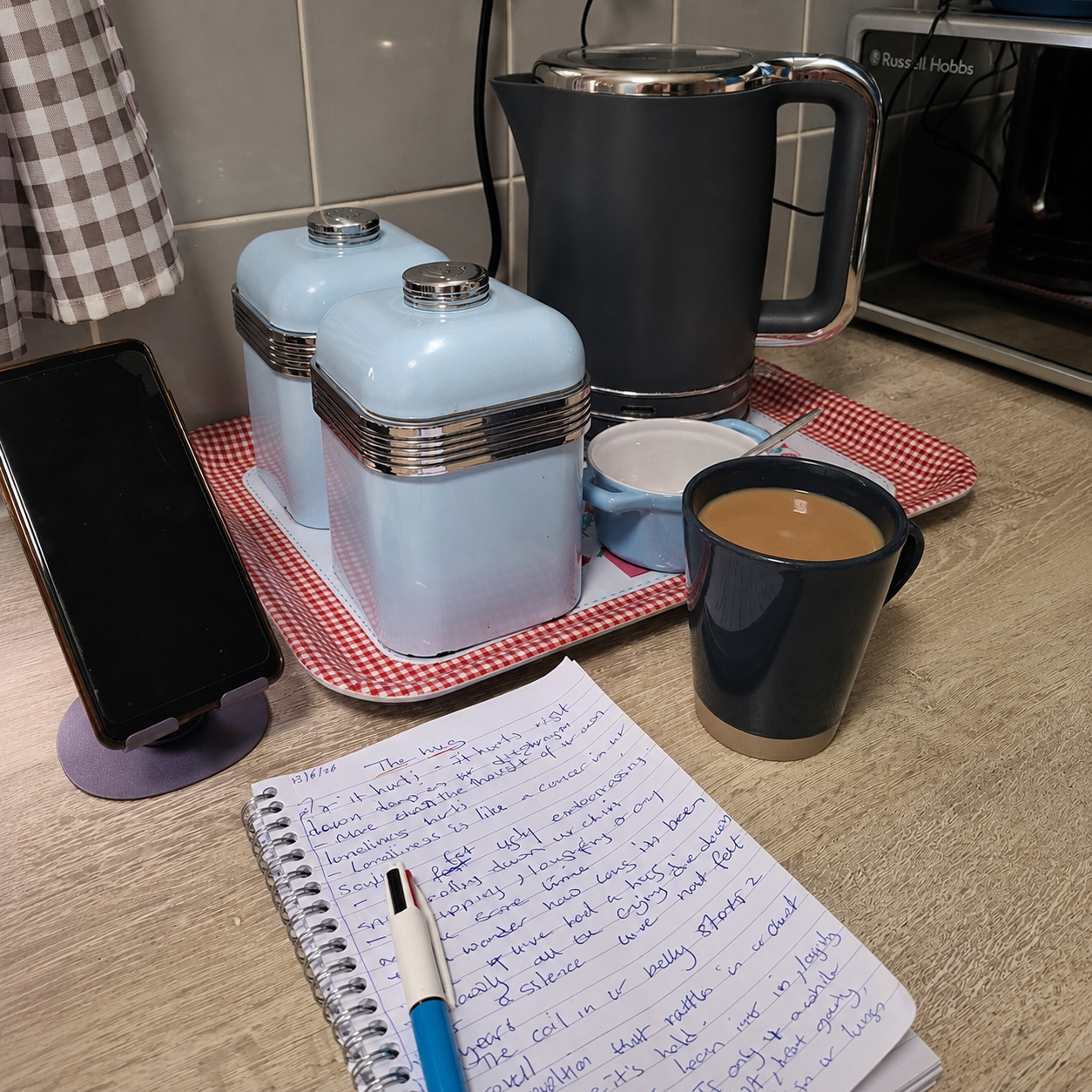
By Natasha C Akinfolarin #DislexicPoet
I have been thinking a lot lately about why people write.
Not technically.
Not academically.
Not because we enjoy words.
But deeper than that.
Why do some of us need to write?
And I think for many people, especially people who have lived through trauma, addiction, heartbreak, abuse, mental health struggles, grief, or emotional isolation, writing becomes a form of taking control back.
Not control in a cruel way.
Not power over others.
But power over ourselves.
Power over the silence.
Power over the chaos.
Power over the memories trying to consume us.
When life has made you feel powerless for long enough, writing can become the one place where your voice belongs entirely to you.
You decide what gets spoken.
You decide what gets remembered.
You decide what survives the darkness.
I think that is why raw writing connects with people so deeply.
Because readers can feel when someone is not just writing to sound beautiful.
They can feel when someone is writing to survive themselves.
For me, poetry was never really about perfection.
It was about trying to understand my own head.
Trying to make sense of emotions too heavy to carry silently.
And dyslexia adds another layer to that for me.
People often think dyslexia is only about spelling or reading, but sometimes it feels much bigger than that.
Sometimes it feels like having fifty thoughts arrive at once.
Ideas.
Memories.
Connections.
Emotions.
Fragments of sentences.
Everything moving at the same speed inside your head with nowhere to land.
It can make your mind feel scattered, overstimulated, chaotic at times.
Writing gives me somewhere to put those thoughts.
Somewhere to slow them down long enough to understand them.
The page becomes structure.
A place where the noise can line itself up for a while.
And maybe that is another reason writing feels like control to me.
Because when your thoughts are constantly moving, constantly colliding into one another, writing allows you to take what feels messy inside your mind and place it into some kind of order.
Not perfect order.
Human order.
An emotional map of how your mind actually works.
Writing gave shape to things I could not explain out loud.
Fear.
Shame.
Love.
Addiction.
Recovery.
Loneliness.
Healing.
The war inside my own mind.
Sometimes I think the page became the only place I could truly tell the truth.
And maybe that is why so many writers obsess over structure, rhythm, editing, and placement too.
Even editing can feel symbolic.
Choosing what stays.
Choosing what gets cut.
Choosing where the reader pauses.
Choosing where the emotion lands.
It is a way of saying:
“This belongs to me now.”
I think that is why so much of my work lives somewhere between control and surrender.
The poem begins controlled.
Then emotion starts bleeding through the cracks.
And somewhere inside that tension, something honest appears.
Not polished.
Not perfect.
Human.
I also think writing helps people reclaim identity after difficult experiences.
Trauma can fragment you.
Addiction can erase pieces of you.
Mental health struggles can make you feel disconnected from yourself.
But writing says:
“I am still here.”
And sometimes that is enough to begin rebuilding.
Nearly all of my poetry is rooted in recovery in some way.
Not always recovery from drink or drugs.
Sometimes recovery from silence.
Recovery from shame.
Recovery from becoming disconnected from yourself.
Maybe that is what writing really is for some of us.
Not attention.
Not performance.
Reclamation.
Taking the pen back.
Taking the voice back.
Taking yourself back.
And honestly?
I think that is a kind of freedom.
You can read some of my work here
Thank you for reading.
Your DislexicPoet 🖤