
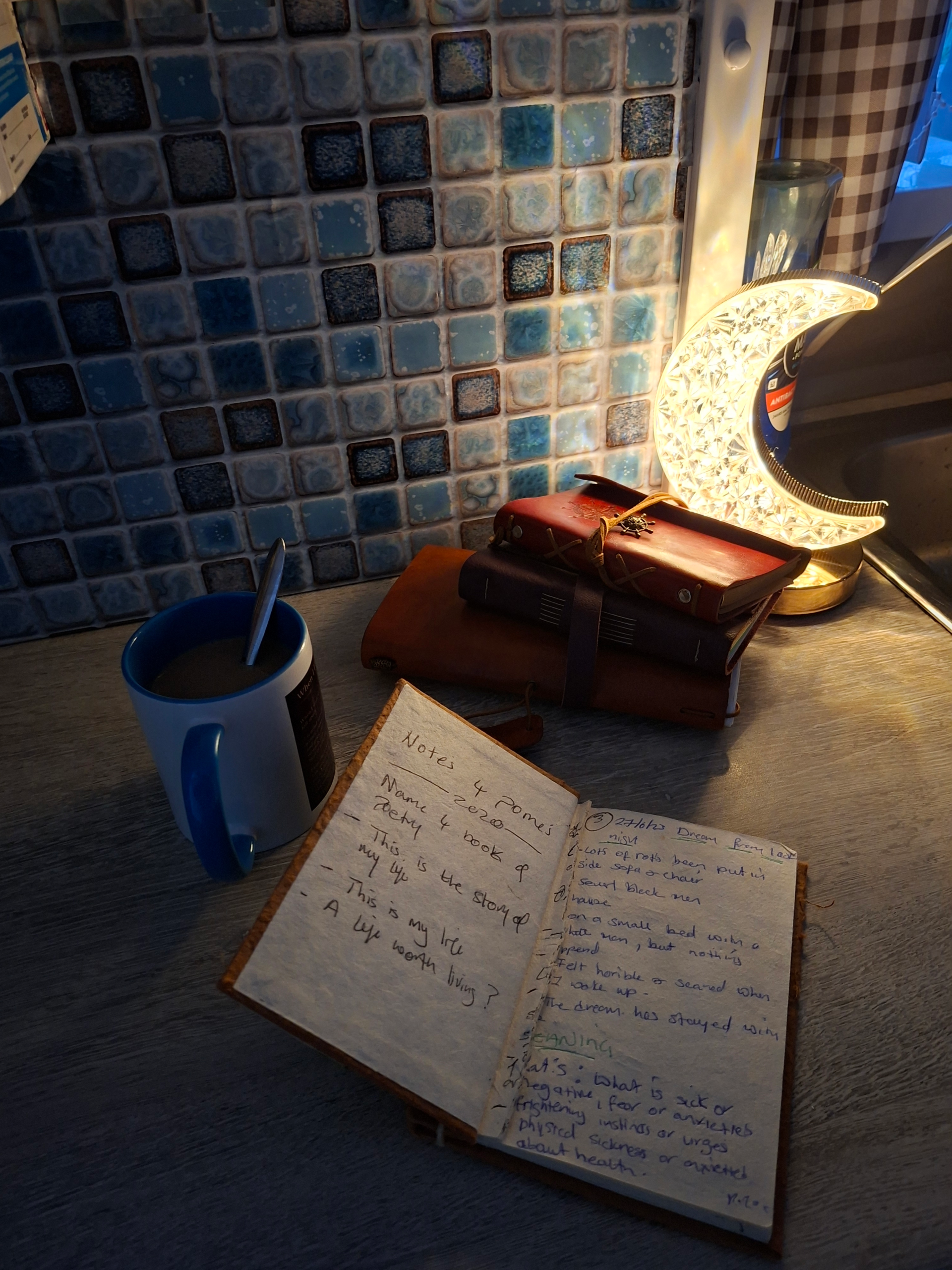
By Natasha C. Akinfolarin
Before I understood the word dyslexia,
Before I understood trauma,
Before I understood survival —
I understood poetry.
Poetry was the first place my mind made sense.
The world outside me often felt loud, fast, and misaligned.
But inside a poem, everything slowed down.
Words didn’t have to march in straight lines.
They could bend.
They could pause.
They could breathe.
I was taught as a child that little girls should be seen and not heard.
Poetry quietly disagreed.
Poetry was a way of expressing myself safely.
There was no wrong or right — it was whatever I wrote it to be.
Inside a poem, my imagination had permission to live.
It didn’t need correcting.
It didn’t need explaining.
It simply existed.
In poetry, I had dreams.
I had hopes.
I could build worlds that felt kinder than the one around me.
Poetry gave structure to what I couldn’t explain.
There were things I could not say out loud.
There were feelings too big for conversation.
But on a page, they softened.
They arranged themselves.
They stopped being chaos and became meaning.
Poetry didn’t fix my life.
It shaped my inner world so I could survive it.
It gave me a language for pain, a rhythm for confusion, a container for anger, and a quiet place for love.
In poetry, I didn’t have to perform.
I didn’t have to be smaller.
I didn’t have to translate myself into something acceptable.
My inner world is deep.
Layered.
Fierce.
Compassionate.
Sometimes heavy.
Sometimes light.
Poetry allowed all of it to exist without shame.
It taught me that intensity is not weakness.
That feeling deeply is not a flaw.
That silence can speak.
Now, when I write, I am not just creating poems.
I am mapping my inner landscape.
Each piece is a doorway into a mind that once felt fractured,
And now feels understood.
Poetry did not make me who I am.
But it allowed me to meet myself fully.
And once you meet yourself —
You are never invisible again.
Thank you for reading 🖤
#DislexicPoet